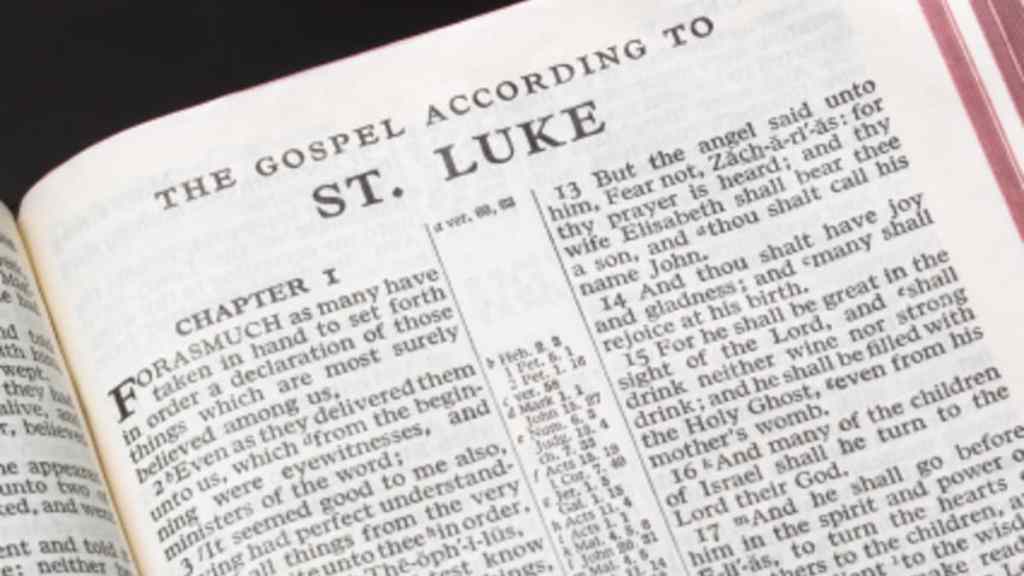
This is a study of Luke that can be used as a devotional. I will go through each of the Gospels using the acrostic of HEAL to each Gospel. HEAL stands for:
H = Honour God with commitment of time to study His Word
E = Examine your heart and pray to invite Him into your study
A = Ask God to reveal His truths in each passage
L = Listen to what He says and write it down
Using these principals, we will go through each book together and see what we can gleam from God’s fantastic and infallible Word. May God bless you through His Word! He wants you to live a healthy and godly life – today…
–
Part 1: He’s got this
4 That thou mightest know the certainty of those things, wherein thou hast been instructed.
10 And the whole multitude of the people were praying without at the time of incense.
12 And when Zacharias saw him, he was troubled, and fear fell upon him.
14 And thou shalt have joy and gladness; and many shall rejoice at his birth.
16 And many of the children of Israel shall he turn to the Lord their God.
21 And the people waited for Zacharias, and marvelled that he tarried so long in the temple.
24 And after those days his wife Elisabeth conceived, and hid herself five months, saying,
Luke 1:1-25
“28 For I say unto you, Among those that are born of women there is not a greater prophet than John the Baptist: but he that is least in the kingdom of God is greater than he.”
Luke 7:28
“11 Verily I say unto you, Among them that are born of women there hath not risen a greater than John the Baptist: notwithstanding he that is least in the kingdom of heaven is greater than he.”
Matthew 11:11
Luke is a writer who often includes more detail about an event than other New Testament writers. In his introduction, he tells us that he has worked really hard to give us the most accurate account of the events he’s going to share as well. Additionally, some of Luke’s writings contain events which no other gospel writer included (e.g. Luke 9:51-18:35). We also know that Luke spent a lot of time with the apostle Paul who authored 13 of the books in the New Testament.
Luke begins his account of the life of Jesus by describing what happened to a priest named echariah (spelled Zecharias in som Bible translations) one day in Herod’s Temple in Jerusalem. The priests, who were all descendants from the Old Testament tribe of Levi, who were direct descendants of Aaron, Moses’ brother, were in charge of all the responsibilitues within the Temple. Luke described how on this particular day, Zechariah had been chosen by lot (like drawing straws) to burn the incense on the altar. The Altar of Incense, as it was called, sat directly in front of the entrance to the Holiest of Holies, the place wehere the Spirit of the Lord dwelt. We learn through biblical commentary and historical sources that because of the large number of priests in each didision, each individual priest would burn incebse at this altar only once in his lifetime, if he were lucky enough to be selected at all. So. it was a big deal that Zechariah was chosen to burn incense at the altar for that day.
Luke then describes how once Zechariah approached the altar to offer the incense, an angel of the Lord appeared to Zechariah and actually had an audible conversation with him. It’s so amazing that we get to hear what Gabriel had to say! When Gabriel told Zechariah that he and his wife were going to have a baby, Zechariah was skeptical to say the least, since he and his wife were well beyond childbearing age. In the next few verses, we learn that the child that was going to be born is the man we know as John the Baptist, the forerunner to the long-awaited Messiah, Jesus Christ.
In those days, having children was considered to be a direct blessing from God. To the contrary, being barren or having no children was considered to be a curse. Zechariah and his wife, Elizabeth, despite having lived long lives as “righteous before God, walking in all the commandments and ordinances of the Lord blameless” (1:6), were barren and by all human description well beyond the age which a couple could conceive. It seemed as though time had run out for these nice people and that they would remain cursed. But, we know that this is not how this story ends. In fact. this couple’s child, John the Baptist, was one to whom Jesus referred when He said that there was no one greater who had lived. In one moment, Zechariah’s life changed forever.
The point is this: regardless of what our circumstances appear to be, we must trust that God is capable of all things. He can cause one priest, out of many, to be selected by “random” draw to go before the Altar of Incense on a particular day so that an angel can come to meet him there to announce he would soon be a father, despite he and his wife’s being well beyond conceiving years. Irrespective of our current sircumstances, our God is able. The “whatever” osn’t always as profound as delivering a baby to an old couple, it is often less newsworthy, yet still miraculous and life changing! We don’t have to manipulate, orchastrate, invent or prevent — He is able to accomplish His plans when we are willing to let Him. Pursue Him and He will provide everything else. Rest in that promise, especially during times of trouble.
Questions:
- Do you feel like your current circumstances can’t improve?
- Could it be the voice of the enemy encouraging you to give up?
- Can we rely and rest in the promises of our heavenly Father?
–
Part 2: His plan, not mine
30 And the angel said unto her, Fear not, Mary: for thou hast found favour with God.
33 And he shall reign over the house of Jacob for ever; and of his kingdom there shall be no end.
34 Then said Mary unto the angel, How shall this be, seeing I know not a man?
37 For with God nothing shall be impossible.
39 And Mary arose in those days, and went into the hill country with haste, into a city of Juda;
40 And entered into the house of Zacharias, and saluted Elisabeth.
43 And whence is this to me, that the mother of my Lord should come to me?
46 And Mary said, My soul doth magnify the Lord,
47 And my spirit hath rejoiced in God my Saviour.
49 For he that is mighty hath done to me great things; and holy is his name.
50 And his mercy is on them that fear him from generation to generation.
52 He hath put down the mighty from their seats, and exalted them of low degree.
53 He hath filled the hungry with good things; and the rich he hath sent empty away.
54 He hath holpen his servant Israel, in remembrance of his mercy;
55 As he spake to our fathers, to Abraham, and to his seed for ever.
56 And Mary abode with her about three months, and returned to her own house.
57 Now Elisabeth’s full time came that she should be delivered; and she brought forth a son.
60 And his mother answered and said, Not so; but he shall be called John.
61 And they said unto her, There is none of thy kindred that is called by this name.
62 And they made signs to his father, how he would have him called.
63 And he asked for a writing table, and wrote, saying, His name is John. And they marvelled all.
64 And his mouth was opened immediately, and his tongue loosed, and he spake, and praised God.
67 And his father Zacharias was filled with the Holy Ghost, and prophesied, saying,
68 Blessed be the Lord God of Israel; for he hath visited and redeemed his people,
69 And hath raised up an horn of salvation for us in the house of his servant David;
70 As he spake by the mouth of his holy prophets, which have been since the world began:
71 That we should be saved from our enemies, and from the hand of all that hate us;
72 To perform the mercy promised to our fathers, and to remember his holy covenant;
73 The oath which he sware to our father Abraham,
75 In holiness and righteousness before him, all the days of our life.
77 To give knowledge of salvation unto his people by the remission of their sins,
78 Through the tender mercy of our God; whereby the dayspring from on high hath visited us,
Luke 1:26-80
In today’s passage, we can learn an invaluable priciple from the words of Mary. In response to Gabriel’s announcement to Mary that she would soon give birth to a child conceived by the Holy Spirit, she simply respinded: “Behold the handmaid of the Lord; be it unto me according to thy word” (1:38). In essence, Mary was saying that no matter how outrageous this prediction appeared on its surface, she believed Gabriel’s words had come to her from her heavenly Father, and she would trust Him completely. She did not focus on what would likely have been natural responses, such as “What will people think? My parents will freak out! Will I be stoned to death? What if Joseph dumps me and I’m all alone? What if…?” etc. Instead, she declared unequivocally that she would surrebder her will to her heavenly Father’s divine plan despite the earthly consequences.
Perhaps this kind of response can encourage us today. Even though we may be suffering on many differet levels and our circumstances seem confusing, we can declare to ourselves and to those around us that we will surrender our will in order that we may ultimately fulfill the purposes of our heavenly Father. In other words, we can try to focus on the possibilities of how our suffering could advance His Kingdom.
Questions:
- Could my sufferings and/or my response to my suffering bring others to the saving knowledge of Jesus Christ?
- Am I willing to walik through this valley, trusting that my Father is with me and that He is capable of all things?
- Is there someone else who is suffering whom I could encourage with these words today?
–
Part 3: 70 miles on a donkey?
2 (And this taxing was first made when Cyrenius was governor of Syria.)
3 And all went to be taxed, every one into his own city.
5 To be taxed with Mary his espoused wife, being great with child.
11 For unto you is born this day in the city of David a Saviour, which is Christ the Lord.
13 And suddenly there was with the angel a multitude of the heavenly host praising God, and saying,
14 Glory to God in the highest, and on earth peace, good will toward men.
16 And they came with haste, and found Mary, and Joseph, and the babe lying in a manger.
18 And all they that heard it wondered at those things which were told them by the shepherds.
19 But Mary kept all these things, and pondered them in her heart.
28 Then took he him up in his arms, and blessed God, and said,
29 Lord, now lettest thou thy servant depart in peace, according to thy word:
30 For mine eyes have seen thy salvation,
31 Which thou hast prepared before the face of all people;
32 A light to lighten the Gentiles, and the glory of thy people Israel.
33 And Joseph and his mother marvelled at those things which were spoken of him.
41 Now his parents went to Jerusalem every year at the feast of the passover.
42 And when he was twelve years old, they went up to Jerusalem after the custom of the feast.
45 And when they found him not, they turned back again to Jerusalem, seeking him.
47 And all that heard him were astonished at his understanding and answers.
50 And they understood not the saying which he spake unto them.
52 And Jesus increased in wisdom and stature, and in favour with God and man.“
Luke 2
Everyone is familiar with the story of the birth of Jesus in this chapter. Fmiliarity, sometimes, can cause us to gloss over certain details in a story; details which may be very helpful to us during our healing journey. There are many of those in this account, but let’s focus on one: Mary, a young Jewish woman who was engaged to be married, conceived through the Holy Spirit of God, and carried in her womb the Son of God! Joseph is a righteous, Jewish man who has lived his whole life following God’s laws and supports his espoused wife and undoubtedly, and constantly, defending Mary and her reputation to the community over the last months. And, in general, all aspects of daily life were hard for the Jewish people while under Roman rule. Wasn’t that enough to deal with? No, it wasn’t. Now we learn that Mary and Joseph were required by the Roman government (but modtly Jewish tradition) to travel over 70 miles to Joseph’s hometown just to be counted- The census was declared by Caesar Augustus while he sat in his palace, all high and mighty, no doubt taking advantage of every comfort available to mankind at the time. Then tradition and customs have said they rode on a donkey, allthough the Bible doesn’t say so. Great fun! It would have been even worse if the walked the whole way! A real harship for a woman waiting to give birth. But that was what was required of Mary and Joseph, the highly favoured and chosen couple, the earthly parents of Jesus.
Notice that although certainly capable, God did not float them over to Bethlehem on the back of Gabriel’s wings; not even a nice bedded carriage pulled by a strong team of camels, donkeys or horses. Nothing, nada! Who could blame them if there were times in which the couple questioned the goodness of God, His plan for their lives, and whether He even loved them at all? Well, He is good, He did have great plans for them, and He loved them more than we can coprehend, but He did NOT spare them from suffering. He may nor spare us from suffering either. However, suffering never means that He is not good, that He has forgotten His plan for us, or that He simply doesn’t love us, We simply have to trust Him, and then trust Him some more.
Questions:
- Are there times when your suffering cayses you to doubt His love?
- Do you have the courage to admit the doubt and then press into Him and His Word for encouragement?
- Do you believe good cab eventually come from your suffering?
–
Part 4: Who’s in that river?
6 And all flesh shall see the salvation of God.
10 And the people asked him, saying, What shall we do then?
12 Then came also publicans to be baptized, and said unto him, Master, what shall we do?
13 And he said unto them, Exact no more than that which is appointed you.
18 And many other things in his exhortation preached he unto the people.
20 Added yet this above all, that he shut up John in prison.
Luke 3:1-22
Let us never cease to be amazed that God has allowed us easy access to events that forever changed the course of humankind! Today we are eye witnesses to this: Jesus being baptized by John in the Jordan River! Take a moment to focus on this event intently. John had been living in the desert, but now he had come to spend time by the river preaching about the soon coming of the long-awaited Messiah. John was clear as he declared “one mightier than I cometh, the latchet of whose shoes I am not worthy to unloose: he shall baptize you with the Holy Ghost and with fire” (Luke 3:16).
After many others were batized, Jesus steps forward to join in. Although Luke pens less details about this moment than John the Apostle does, he describes the same response to Jesus’ baptism. Luke wrote “it came to pass, that Jesus also being baptized, and praying, the heaven was opened, And the Holy Ghost descended in a bodily shape like a dove upon him, and a voice came from heaven, which said, Thou art my beloved Son; in thee I am well pleased” (3:21-22). Imagine yourself as one in the crowd that day, hearing the voice of God declaring for all mankind the truth of who Jesus really is! Is there anything more we need?
Now that we have been assured that Jesus is who He says He is, we can confidently rely and trust in all of the things He said and promised, right? Of course we can, and we shoulfd! Especially during a time of trouble, we must remind ourselves to rely on the One true source for guidance and comfort – the One and only Son of God!
Questions:
- Do you believe Jesus is the Son of the most high God?
- Do you believe the things He’s promised you?
- Do your actions indicate that you believe His promises?
–
Part 5: It is written
3 And the devil said unto him, If thou be the Son of God, command this stone that it be made bread.
7 If thou therefore wilt worship me, all shall be thine.
10 For it is written, He shall give his angels charge over thee, to keep thee:
11 And in their hands they shall bear thee up, lest at any time thou dash thy foot against a stone.
12 And Jesus answering said unto him, It is said, Thou shalt not tempt the Lord thy God.
13 And when the devil had ended all the temptation, he departed from him for a season.“
Luke 4:1-13
Matthew, Mark and Luke write of Jesus being tempted by the enemy immediately after His baptism. Jesus was led into the desert to spend time alone before He began His full-time ministry. In this region, if one travelled away from a water source, he or she was setting himself or herself up for some serious suffering! Jesus was there for 40 days. He was hungry, thirsty and tired. And His enemy, the same enemy as ours, repeatedly tride to get Jesus off course during a time when He was physically vulnerable. Satan said things like: “If thou be the Son of God, command this stone that it be made bread” (4:3) when He was really hungry, “All this power will I give thee” (4:6) referring to the kingdoms of the world, and “cast thyself down from hence” (4.9) when Jesus must have been physically completely exhausted. Satan even uses parts of Scripture in his temptations!
Isn’t that what happens to us sometimes too? When we are physicaly sick, tired, exhausted or just weary on our journey, our enemy seems to speak the loudest: “Just give up, give in, step off the cliff.” But we know what we must do in these situations. We must follow Jesus’ example and speak the Word back to our ebemy. The spoken Word will fight the battle for us, and it will always win. Jesus said repeatedly “It is written…”. Jesus knew that we would need His example many times in our lives, and He sacrificed His comfort so that we could know what to do in times of great temptation. Let us not let His suffering to go waste. Combat the enemy’s lies with the truth of God’s Word…
Questions:
- Are our thoughts coming from the echo of what the eneny says?
- Are we reminding ourselves of what God actually is telling us?
- What will happen if we speak the truth og God’s Word back to the enemy?
–
Part 6: I’m not listening to the lies!
“31 Who appeared in glory, and spake of his decease which he should accomplish at Jerusalem.
35 And there came a voice out of the cloud, saying, This is my beloved Son: hear him.
Luke 4:31-37
23 And there was in their synagogue a man with an unclean spirit; and he cried out,
25 And Jesus rebuked him, saying, Hold thy peace, and come out of him.
26 And when the unclean spirit had torn him, and cried with a loud voice, he came out of him.
28 And immediately his fame spread abroad throughout all the region round about Galilee.“
Mark 1:21-28
“7 Submit yourselves therefore to God. Resist the devil, and he will flee from you.”
James 4:7
8 For he said unto him, Come out of the man, thou unclean spirit.
9 And he asked him, What is thy name? And he answered, saying, My name is Legion: for we are many.
10 And he besought him much that he would not send them away out of the country.
11 Now there was there nigh unto the mountains a great herd of swine feeding.
12 And all the devils besought him, saying, Send us into the swine, that we may enter into them.
Mark 5:7-13
We first read of the events described in today’s passage in Mark 1:21-28. When several writers describe the same event, we ought maybe to pay very close attention to the events described. There is such a powerful principle displayed in this event that if we see and believe it, our lives will be changed forever. Our enemy – Satan, the devil, Lucifer or any other name he goes by – HAS TO bow down to the authority of God’s Word! Here we see that Jesus had been teaching in the synagogue and the people were amazed at the authority with which He spoke.
Since Jesus is THE WORD, He naturally had authority when He spoke it! While He was teaching, a man possessed by a deomn began shouting and disrupting Jesus’ message. Look carefully at what the demon audibly said. It called Jesus by His name, “Jesus of Nazareth… I know thee who thou art, the Holy One of God” (Mark 1:24). Even the demons know the truth of who Jesus really is, but they can’t eccept the fact that they will lose every time they challenge Him, so they keep trying.
Notice the confidence with which Jesus responded to the voice of the enemy, “Hold thy peace, and come out of him” (1:25). And that is exactly what heppened. The demon fled! The Word repeatedly gives examples of the priciple that speaking the Word of God with authority will shut down the enemy every time.
As believers, we are the sons and daughters of the most high God. As such, we have all the rights and privileges of our position in Him. We have the same autority to speak to our enemy like Jesus did because He gave us authority. In other words, say to the enrmy: “I’m not listeninf to you, so leave!” Then we would speak some of our favourite scriptures to replace the lies that were spoken by the enemy. We can study the Word and use it in this way every time the enemy comes to us with his lies!
Quetions:
- If we know God’s ord, will it be easier to recognize and ignore the voice of the enemy?
- Do we truly believe God’s Word has more power than the enemy’s words?
- What are some lies that need to be replaced in our lives right now?
–
Part 7: Come away from the crowd
6 And when they had this done, they inclosed a great multitude of fishes: and their net brake.
11 And when they had brought their ships to land, they forsook all, and followed him.
16 And he withdrew himself into the wilderness, and prayed.
20 And when he saw their faith, he said unto him, Man, thy sins are forgiven thee.
23 Whether is easier, to say, Thy sins be forgiven thee; or to say, Rise up and walk?
27 And after these things he went forth, and saw a publican, named Levi, sitting at the receipt of custom: and he said unto him, Follow me.
28 And he left all, rose up, and followed him.
32 I came not to call the righteous, but sinners to repentance.
38 But new wine must be put into new bottles; and both are preserved.
39 No man also having drunk old wine straightway desireth new: for he saith, The old is better.“
Luke 5
36 And Simon and they that were with him followed after him.
37 And when they had found him, they said unto him, All men seek for thee.
39 And he preached in their synagogues throughout all Galilee, and cast out devils.“
Mark 1:35-39
Luke 5 has so many treasures for us, so let’s focus on 5:16: “And he withdrew himself into the wilderness, and prayed.” Jesus had been travelling, teaching, healing and preforming all kinds of other miracles nonstop since He started His ministry. The Scriptures tells us that He “often” withdrew to “lonely” places to pray.
When we study the Bibel we should ask ourselves “Why is this sentence found worthy to be placed in the Book of books?” Obviously, if Jesus found it necessary to pull away from the crowd to spend time alone with His heavenly Father, which He “often” found necessary, then, surely, we must have an even greater need to do the same.
Especially during times of trouble and suffering, we need to pull away from all that crowds us and clutters our minds, and spend time alone with our heavenly Father. And we should do it often!
Questrions:
- When we’re alone, have we invited our heavenly Father for a visit?
- Are we confident that He will brespond?
- Are we spending more time talking about our issues with our friends than we do with our Father?
–
Part 8: Your mat may be part of your message
20 And when he saw their faith, he said unto him, Man, thy sins are forgiven thee.
23 Whether is easier, to say, Thy sins be forgiven thee; or to say, Rise up and walk?
Luke 5:17-26
In this passage, we hear Luke’s version of Jesus miraculously healing the paralytic man who had been brought to Jesus by his friends by lowering him through the roof. Luke tells us that the man had been lying on a mat (“couch” in the KJV) and that Jesus specifically mentioned the mat when healing the man. Was the mat important to the story, and if so, why?
The mat was likey soiled in many ways and may have had an odour. It may have been heavily worn, maybe even threadbare. Perhaps the mat represented many days, months or years that the man had placed himself, since he had lain on that mat for some time.
Jesus told him: “Arise, and take up thy couch, and go into thine house” (5:24). Jesus didn’t ignore the mat or instruct him to throw away the mat. Maybe the mat had further use in the future. The healed man could show those he encountered the very mat that he had depended on for a long time, and that it was no longer needed!
Questions:
- Do we have a “mat” as we travel through this healing journey?
- Are we relying on our mat heavily?
- Do we believe that we will some day use the mat as the trophy to our testimonies?
–
Part 9: The Doctor is in the house
28 And he left all, rose up, and followed him.
32 I came not to call the righteous, but sinners to repentance.“
Lukas 5:27-32
After Levi, a.k.a. Matthew, had his encounter with Jesus, he wanted to introduce as many friends as he could to Jesus as well. So he trew a party, and many of his “tax collector” buddies came. Despite the tax collectors being consideres low-class thieves who were despised by most, Jesus joined their party and even sat to share a meal with them.
Take note that Jesus has never, and never will, discriminate against anyone! He consistently, over and over again, teaches us how to love everybody just as they are. Then when we share Him with them, He will handle the rest.
Look at what “the religious folk” thought about Jesus spending time with the tax collectors. Their response lets us know for certain that they had no clue who Jesus really was! Even though the Svripture says the Pharisees’ question or comlaint was directed at the disciples, Jesus gave His owb reply, and what a fantastic reply it was!
“They that are whole need not a physician; but they that are sick” (Luke 5:31). He referred Himself to Himself as a doctor for sick people. He linked their spiritual condition to their physical health, sickness versus health. Many times in the Scriptures (Part 7 for example) Jesus seemed most concerned about the spiritual condition of those He met. He would forgive their sins followed by healing of their bodies.
Question:
- Could the overwhelming power of the forgiveness of their sins cause bodies to heal?
- Is physical health more important than spiritual health?
- Regardless of the condition of our physical body, are we healthy in our spirits?
–
Part 10: He gives life
5 And he said unto them, That the Son of man is Lord also of the sabbath.
11 And they were filled with madness; and communed one with another what they might do to Jesus.“
Luke 6:1-11
This passage is Luke’s version of the story of the man with the paralytic hand that Jesus healed on the Sabbath in the synagogue. There was a man there with a shriveled hand, amd the Pharisees and teachers of the law were looking for a reason to accuse Him, so they were watching Him closely. Was the man with the shriveled hand a part of a st up, or was he just at the right place at the right time?
Not knowing how long the man had suffered with his hand, one thing we know for sure: the day he encountered Jesus was the last day he suffered with it! Jesus used this man’s suffering to teach the people that He came to give life, not death, and that He did not come to see who was following all the rules.
Questions:
- Is it possible that our suffering could result in others being brought to the saving knowledge of Christ?
- Has there been times in our lives that were painful, yet looking back we can see how God used it for good?
- Could drawing closer to our heavenly Father by learning more of His Word be a benfit from our times of suffering?
–
Part 11: Solid foundation
27 But I say unto you which hear, Love your enemies, do good to them which hate you,
28 Bless them that curse you, and pray for them which despitefully use you.
30 Give to every man that asketh of thee; and of him that taketh away thy goods ask them not again.
31 And as ye would that men should do to you, do ye also to them likewise.
36 Be ye therefore merciful, as your Father also is merciful.
40 The disciple is not above his master: but every one that is perfect shall be as his master.
46 And why call ye me, Lord, Lord, and do not the things which I say?
Luke 6:27-49
Masses of people had gathered on the slope of a hill leading down to the Sea of Galilee to hear what Jesus had to say and to experience His healing power. Imagine yourself sitting in the crowd listening too. Jesus described how His kingdom is NOT like the kingdoms of the world. In fact, it almost seems to be completely opposite. Jesus began to teach about how we are to treat each other if we call ourselves His followers: “Love your enemies, do good to them which hate you, Bless them that curse you, and pray for them which despitefully use you” (5:27-28).
He further instructs His followers: do not judge each other, do not condemn each other, and always forgive each other. Jesus made no exceptions to this list of things His followers should always do.
He then admonishes us not even to claim that He is our Lord if we are not going to do what He has instructed us to do. WOW! He instructs this way for our good and this will lead us to the abundant life He has planned for us. More specifically here, He tells us that in order to avoid utter destruction when storms of life come (and they will come), we need a solid foundation built ahead of time, and that foundation is bulit by following His teachings.
Questin:
- Are there someone we should forgive in order to be aligned with Jesus’ teachings?
- Are tgere someone from whom we should ask forgiveness because we have judged or condemned them?
- Do we believe Jesus has given those instruction because He loves us?
–
Part 12: Help is on the way
13 And when the Lord saw her, he had compassion on her, and said unto her, Weep not.
15 And he that was dead sat up, and began to speak. And he delivered him to his mother.
16 And there came a fear on all: and they glorified God, saying, That a great prophet is risen up among us; and, That God hath visited his people.
Luke 7:11-17
Jesus left Caperbaum and headed toward Nain with a huge crowd following Him. For safety purposes, the towns in those days often had walls around them with gates as the only ebtrances. As Jesus and the crowd arrived at the town gate, a funeral possession was coming out of the gate, and it was one of the worst kinds of death… a widow having to bury her only child! Jesus showed great compassion to the woman and said “Weep not” (7:13). He walked over to her dead son and touched the plank that he lay on.
Immediately everyone froze, likely because Jewish custom was that to come in contact with the dead would cause one to be “unclean” and, subsequently, cast out from anongst the people. Jesus was not concerned about all those rules. Again we see that He simply spoke the word, “Young man, I say unto thee, Arise” (7:14). And again,, this is exactlywhat thr young man did!Notice that the young man began to speak as well. Although we don’t know what he said, we can be certain of what his mother would have said! And the reaction of the crowd was that “God hath visited his people” (7:16). Yes indeed, He had visited His people!
Questions:
- Are we consequently speaking the Word of God over our situations?
- Do we believe that Jesus still helps us?
- Could a change in our circumsrances be headed our way?
–
Part 13: Producing a great crop
7 And some fell among thorns; and the thorns sprang up with it, and choked it.
9 And his disciples asked him, saying, What might this parable be?
11 Now the parable is this: The seed is the word of God.
19 Then came to him his mother and his brethren, and could not come at him for the press.
26 And they arrived at the country of the Gadarenes, which is over against Galilee.
31 And they besought him that he would not command them to go out into the deep.
36 They also which saw it told them by what means he that was possessed of the devils was healed.
46 And Jesus said, Somebody hath touched me: for I perceive that virtue is gone out of me.
48 And he said unto her, Daughter, be of good comfort: thy faith hath made thee whole; go in peace.
52 And all wept, and bewailed her: but he said, Weep not; she is not dead, but sleepeth.
53 And they laughed him to scorn, knowing that she was dead.
54 And he put them all out, and took her by the hand, and called, saying, Maid, arise.
55 And her spirit came again, and she arose straightway: and he commanded to give her meat.
56 And her parents were astonished: but he charged them that they should tell no man what was done.“
Luke 8
Jesus often taught about the priciples of God’s Kingdom by using parables, that is describing a comcept by using an analogy to something everyone could understans. Everyone in His audience could understand how a seed is planted in the ground and what can happen after the planting. He used four scenarios. When planting seed, sometimes:
- Seed falls by the wayside and is trampled.
- Seed falls among the rocks and dries up without water,
- Seed falls among thorns and weeds and gets choked outm and
- Seed falls in good soil and yields fruit.
He is talking about the “seed” of His Word, of course. He’s teaching us that to actually see a harvest of good fruit when we hear His Words, we must make sure the Word lands in category 4, good soil, and not catagories 1( fall by the wayside, 2) among hardness with n water, or 3) allowed to be swallowed up by weeds.
While studying and learning His Word, we must be careful to protect the prescious seed He deposits in our spirit. In other words, plant them deeply in our ouls, take care to water them and pull weeds (negative thoughts and lies) from among them. Then, expect a harvest of a hundred-fold!
Questions:
- Are we expecting a hundred-fold harvest from the things we learn from His Word?
- Are we being good “farmers” with the precious seeds?
- Can we idetify some rocks or weeds that needs to be removed from our soil?
–
Part 14: Go and tell
“26 And they arrived at the country of the Gadarenes, which is over against Galilee.
31 And they besought him that he would not command them to go out into the deep.
36 They also which saw it told them by what means he that was possessed of the devils was healed.
Luke 8:26-39
Notice what Jesus told the man who had been healed from demon possession, “Return to thine own house, and shew how great things God hath done unto thee” (8:39). One of His primary purposes in healing was so that His message would be spread.
Despite our current situation, there are likely many things in our past which we should “Return to (our) own house, and shew how great things God hath done.” First and foremost, God sent His only Son to die a cruel death so that we could have eternal life in a glorious place. If nothing else, that’s enough. Gratefulness is really important in God’s Kingdom and sharing His message is what He has called us to do.
Questions:
- Are there things in our lives that we should show more gratitude for?
- Would it improve my state-of-mind to dwell on these things?
- Has His kindness to us already surpassed anything I could justafiably ask for?
–
Part 15: In His timing
46 And Jesus said, Somebody hath touched me: for I perceive that virtue is gone out of me.
48 And he said unto her, Daughter, be of good comfort: thy faith hath made thee whole; go in peace.
52 And all wept, and bewailed her: but he said, Weep not; she is not dead, but sleepeth.
53 And they laughed him to scorn, knowing that she was dead.
54 And he put them all out, and took her by the hand, and called, saying, Maid, arise.
55 And her spirit came again, and she arose straightway: and he commanded to give her meat.
56 And her parents were astonished: but he charged them that they should tell no man what was done.“
Luke 8:40-56
We have studied this event in the other Gospels, but there is always more to be found in the Bible each time we read. Notice tha Jairus’ daughter was about twelve years old and the woman with the blood condition had suffered with her condition twelve years. Assuming facts and figures in the Scriptures are there for a reason, we wonder why “twelve years” is mentioned. One reason may be that some times suffering can endure for many years, but there is always hope when we know Jesus.
Another could be a reminder that there are different perspectives even about a specific time frame. The woman in the story likely felt like her twelve years had beeb such an incredibly long time. She must have felt exhausted by this length of time. On the other hand, Jairus had only had his daughter with him for twelve years, and he must have thought it was such a short time since she was already facing death.
Other thaughts is that the numer twelve is a number of relationships. Jesus chose 12 disciples to follow Him. It has also been described as a number that represents duality and balance. It definately makes a balance to this story. It can also represent emotional balance, balance between physical and spiritual, and is often used about the persuit of peace.
Regardless, we can see that each of us must trust God with the “timing” in our lives. There is no need to compare the “timing” in our lives to any other. We must simply bring all our cares to Jesus and trust that He will handle them in His perfect timing.
Questions:
- Are there things in our lives that we think has been going on for too long?
- Have we completely surrendered those things to Jesus?
- Can we trust in His timing?
–
Part 16: Take me away
30 And, behold, there talked with him two men, which were Moses and Elias:
31 Who appeared in glory, and spake of his decease which he should accomplish at Jerusalem.
35 And there came a voice out of the cloud, saying, This is my beloved Son: hear him.
Luke 9:28-36
This passage tells us that about a week after Jesus talked to His disciples about His soon-coming death, He took Peter, James and John with Him up on the mountain to pray. Jesus, as a man in human form, must have been heavily burdened with the weight of what was to come. He found it important to gather some of His closest friends with Him to spend intimate time with His heavenly Father. As He was talking to the Father, His face and His clothing changed drastically… “the fashion of his countenance was altered, and his raiment was white and glistering” (9:29). Then Moses and Elijah appeared, followed by a heavy cloud that engulfed all of them. Finally, “there came a voice out of the cloud, saying, This is my beloved Son: hear him” (9:35). Isn’t that reassuring? God confirmed once again that Jesus was who He said He was.
jesus knew the time was soon coming in which those closest to Him could have a reason to question His identity. The Father graciously allowed this obvious affirmation for them as well as for us. Sometimes, maybe we need to allow Jesus to take us away to a mountain to pray, so that we can be remembered of His identity and our need to listen to Him.
Quetsions:
- Are we setting aside time to be “taken away” with the Son of God?
- Are we listening to thethings that Jesus has said?
- Do we know somene who could benefit from coming away with us for a time with the Father?
–
Part 17: Firsthand knowledge
3 Go your ways: behold, I send you forth as lambs among wolves.
4 Carry neither purse, nor scrip, nor shoes: and salute no man by the way.
5 And into whatsoever house ye enter, first say, Peace be to this house.
8 And into whatsoever city ye enter, and they receive you, eat such things as are set before you:
9 And heal the sick that are therein, and say unto them, The kingdom of God is come nigh unto you.
12 But I say unto you, that it shall be more tolerable in that day for Sodom, than for that city.
14 But it shall be more tolerable for Tyre and Sidon at the judgment, than for you.
15 And thou, Capernaum, which art exalted to heaven, shalt be thrust down to hell.
18 And he said unto them, I beheld Satan as lightning fall from heaven.
Luke 10:1-24
Notice how the 72 that were sendt out came back boldly declaring that all demons had to submit to the name of Jesus. They had learned it firsthand! Jesus had given them authority to trample on snakes ans scorpions and overcome ALL THE POWER OF THE ENEMY.
Evidently, they took Jesus at His Word and experienced His truth on a personal level. That’s what we must continue to do. Let us take Jesus at His Word. Then, experience firsthand Hid promises unfolding in our lives.
Questions:
- What do you think about Jesus thelling them He had seen Satan fall from heaven?
- Wat did Jesus say was even more important than evil spirits having to submit you?
- Are we thankful to Him for revealing these truths to you?
–
Part 18: Priorities
39 And she had a sister called Mary, which also sat at Jesus’ feet, and heard his word.
Luke 10:38-42
“33But seek ye first the kingdom of God, and his righteousness; and all these things shall be added unto you.”
Matthew 6:33
Sometimes we just need to assess and reasses our priorites. What is the most important thing in our lives just now? What do we do first in the morning? How much time do we devote each day to the important issues in our lives? Sometimes an honset assessment can reveal areas to which we have begun to devote a ton of unproductive time. For example, social media or time spent on a computer in general, can easily become a time-eating monster.
Let us remember the words of our Lord in this passage: “thou art careful and troubled about many things: But one thing is needful: and Mary hath chosen that good part” (Luke 10:41-42).
He is, of course, refering to Himself. Let us put on Him, His Word, and knowing more about Him as our number one priority. He promises if we do that, He will handle the other things for us.
Questions:
- What (or who) gets most of my attention?
- Are there some things in our lives that we should devote less time for?
- Do we believe that devoting more time to knowing God through His Word will be worth our time?
–
Part 19: How to pray
3 Give us day by day our daily bread.
6 For a friend of mine in his journey is come to me, and I have nothing to set before him?
Luke 11:1-12
“17 But he, knowing their thoughts, said unto them, Every kingdom divided against itself is brought to desolation; and a house divided against a house falleth.”
1 Thessalonians 5:17
27 Which of you by taking thought can add one cubit unto his stature?
29 And yet I say unto you, That even Solomon in all his glory was not arrayed like one of these.
Matthew 6:25:32
We can’t justifiably say that we don’t know hoew to pray, because Jesus clearly gave us instructions on how to pray. And we’re told to pray without ceasing – contiually.
In this passage, He said “When ye pray, say…” (Luke 11:2). He may not have meant we should always say exactly the same prayer, but we can certainly use this model as a guidance. First, He let us know that we can go directly to the Father, and in doing so, we should show Him the reverence He is due and acknowledge His holiness… “Our Father which art in heaven. Hallowed be thy name.”
Secondly, submission to His will is important… “Thy kingdom come. Thy will be done, as in heaven, so in earth.” Next, we are to kindly ask for today’s provision… not tomorrow’s provision, next week’s provision or next month’s provision… just today’s. That reminds us to value the moment, trust in Him one day at a time, and not worry about the future.
And the next thing He says is to ask for forgiveness for our sins. Notice how He suggests that we ask the Father to forgive us just like we are forgiving others who have sinned against us. Oh my goodness! Did He really say that? Yes, He did! We should ask Him to forgive in the same manner that we are forgiving. I don’t know about you, but some of us need a whole lot of improvement in forgiving of others! The next request is about sin as well. We are to ask our Father to help us stay away from temptation.
It’s important to notewhat is NOT in the model prayer of Jesus. He does not mention a request for healing of our physical bodies. Surely, He was aware of the fraily of the human body. However, He did not mention physical haeling in His prayer. That certainly doesn’t meab we shouldn’t request healing because He clearly bring all our cares to Him, no matter what, but He has not emphasized physical healing in His model prayer.
In fact, we should ask the Father for whatever concerns us, and He will hear our prayer. But in His instructions on how to pray in general, He emphasizes acknowledging our Father’s greatness, the need to submit to His authority, and the importance of forgiveness, and the importance of relying on Him for our daily needs. Now we know how to pray!
Questions:
- Am I talking to God often?
- Am I relying on Him to meet my needs?
- Am I living for today or trying to map out the future?
–
Part 20: How to be blessed
“28 But he said, Yea rather, blessed are they that hear the word of God, and keep it.”
Luke 11:28
This short verse packs a powerful punch! Jesus said to a crowd of listeners: “blessed are they that hear the word of God, and keep it” (Luke 11:28). This is a statement that can stand on its own – it’s THAT powerful.
Let me just add two short comments on today’s verse:
First criteria: You must hear the Word of the Lord. The Bibele is a source of blessings, and many – myself included – have found passages that hits the spot. It may be the words of David in Psalm 23. It may be the entire beautiful Psalm 91 that promises us protection. It may be the wonderful words in Philippians 4:13 that says “I can do all things through Christ which strengtheneth me.” And if you have problems sleeping, you can try and read scriptureverses like Proverbs 3:24: “When thou liest down, thou shalt not be afraid: yea, thou shalt lie down, and thy sleep shall be sweet.” But this is only the first step to obtaining God’s peace.
Second criteria: You must “keep” God’s Word. If you know the entire Bibele from cover to cover by heart, it will not benefit you unless you apply it in your life. I have met many people like this. They tell me: “Yoy can’t show me a scripureverse that I haven’t already read” when it is obvious they have not applied it to their life. Only when we walk colsely with God, staying connected to the true Vine, we can experience God’s blessingsa.
But this verse speaks for itself. May we chose to apply God’s Word in our lives!
Questions:
- Do we truly want to be blessed?
- Are we truly willing to hear the Word of God?
- Are we truly willing to obey the Word of God?
–
Part 21: Another “Do not worry” message
23 The life is more than meat, and the body is more than raiment.
25 And which of you with taking thought can add to his stature one cubit?
26 If ye then be not able to do that thing which is least, why take ye thought for the rest?
29 And seek not ye what ye shall eat, or what ye shall drink, neither be ye of doubtful mind.
31 But rather seek ye the kingdom of God; and all these things shall be added unto you.
32 Fear not, little flock; for it is your Father’s good pleasure to give you the kingdom.
34 For where your treasure is, there will your heart be also.“
Luke 12:22-34
Some have said there are over 360 times in Scripture in which we are instructed not to worry! I have not been able to confirm this, but I know it is mentioned many times in different ways. Today’s passage is one of these, and it comes straight from the lips of Jesus. Jesus plainly told us not to worry about life, what we should eat, about our bodies, what we will wear. Jesus said “it is your Father’s good pleasure to give you the kingdom” (12:32).
Since He has given us the kingdom, He then instructs us to sell our possessions and give the psoceeds to the poor. That’s how His kingdom was designed to work — those who have much should help those who have little. He wants us to meet the needs of others, and He will, in turn, meet our needs.
We don’t have to look far ti find people who need our help and need to see hown beautiful His kingdom really is. Especially during a time of struggle for ourselves, let’s look for ways we can help someone else to experience this perfect principle of the kingdom of God.
Questions:
- Do we belive He has given me His kingdom?
- Can we trust Him to provide for our needs?
- Is He calling us to be His hands and feet and help someone else?
–
Part 22: Crippeled by a spirit
“10 And he was teaching in one of the synagogues on the sabbath.
13 And he laid his hands on her: and immediately she was made straight, and glorified God.
Luke 13:10-17
Here is another account of Jesus healing on the Sabbath Day. He was teaching in the synagogue when He became aware of a woman, “which had a spirit of infirmity eighteen years, and was bowed together, and could in no wise lift up herself” (13:11). The Scriptures says she was bent over, could not straighten up, and had been this way for 18 years!
Apparently, the physical manifestation of having this spirit was a contorted spine. Once again we see that the spiritual health is often connected to the physical health. Notice that when Jesus healed her, He used the words “…thou art loosed…” (13:12). Then He put His hands on her, and she immediately straightened up!
When attacked by the ruler of the synagogue, Jesus again focused on the importance of people rather than old, stale rules. In Mark 2:27 Jesus said “The sabbath was made for man, and not man for the sabbath“. It is important to have a proper perspective on things – put on God’s lenses.
It¨s also important to see what the woman did in response to her being set free… she praised God!
Questions:
- Do you feel crippled in your spirit?
- Have you let Him set you free?
- Do you often praise God for the good in your life?
–
Part 23: “And they had nothing to say”
“1 And it came to pass, as he went into the house of one of the chief Pharisees to eat bread on the sabbath day, that they watched him.
2 And, behold, there was a certain man before him which had the dropsy.
4 And they held their peace. And he took him, and healed him, and let him go;
6 And they could not answer him again to these things.
11 For whosoever exalteth himself shall be abased; and he that humbleth himself shall be exalted.
13 But when thou makest a feast, call the poor, the maimed, the lame, the blind:
Luke 14:1-14
Jesus had been invited to a Pharisee’s home to eat on the Sabbath Day. But that’s not the only reason He was invited there. This passage says that there was a man there who obviously had an ailment, swelling of his body. It’s possible that, yet again, the religious leaders were trying to set Jesus up to violate the law of keeping the Sabbath Day holy.
Notice how Jesus was consistent in His actions by addressing the physical condition of the man in His presence, even though He was only invited there for a meal. Once again, He questioned those in attendance about healing on the sabbath. Jesus contimuously invited those around Him to learn the true principles of His kingdom. Yet the leaders’ hardened hearts were not receptive to His truths.
When Jesus substituted the leaders’ own children in the place of this sick man (or even the leaders’ animals) and asked if they would help them on the Sabbath Day, no one had anything to say. They knew in their hearts that the right thing to do would be to help their child and/or their ox regardless of what day it was!
Jesus wanted them to understand the ultimate purpose of this commandment. Keeping the Sabbath Day holy was for the people’s rest and for worship, not to prevent helping someone in need. Helping others can be considered a beautiful form of worship.
Jesus took hold of yhe man, healed him, and sent him on his way. This man received a great benefit frim Jesus’ teaching that day. Jesus consistently healed those with needs, always with the purpose of spreading the goodness of the attributes of His kingdom.
Questions:
- Are you relying on a set of rules or a relationship with Jesus to set you free?
- Do you believe Jesus wants you well?
- Did Jesus ever tell anyone that healing was based upon anything other that faith/belief?
–
Part 24: Be in the ten percent!
13 And they lifted up their voices, and said, Jesus, Master, have mercy on us.
16 And fell down on his face at his feet, giving him thanks: and he was a Samaritan.
17 And Jesus answering said, Were there not ten cleansed? but where are the nine?
18 There are not found that returned to give glory to God, save this stranger.
19 And he said unto him, Arise, go thy way: thy faith hath made thee whole.“
Luke 17:11-19
While Jesus was on His way back to Jerusalem (and we know what ultimately happened in Jerusalem), He came near a village and TEN lepers began to yell for His help from a distance. Lepers were outcasts, forced to live in seclusion, and strictly forbidden to come near anyone without leprosy. So these lepers yelled for Jesus help! (How did they know who He was? Did His spirit draw them to Him?)
Notice how they addressed Jesus “Jesus, Master…” (17:13). Without hesitation, Jesus responded with instructions “Go shew yourselves unto the priests” (17:14). What an outrageous command! These lepers could have been stoned if they had entered the village and attempted to see a priest. Yet the Scriptures says “And it came to pass, that, as they went, they were cleansed.” Doing what He said to do was crucial to their healing, no matter how outrageous the instruction seemed to be.
But the, look whar happens. Only one of the ten “turned back, and with a loud voice glorified God” (17:15). Moreover, Luke makes a point to let us know that the one who gave thanks was a Samaritan (not even Jewish)! Then, Jesus asked where all the other nine were.
When Jesus asked questions, it wasn’t because He didn’t know the answer; He wanted to make a point. We’re still hearing this question today… where are the other nine? It’s also powerful to see how this passage closes; Jesus simply states “…Arise, go thy way: thy faith hath made thee whole” (17:19).
Questions:
- Have you ever felt led to do something for your health that seemed somewhat outrageous?
- Are yoy in the ten percent or the ninety percent?
- Were the other nine completely healed… spirit and body?
–
Part 25: “It’s not about my ability”
33 And he said unto him, Lord, I am ready to go with thee, both into prison, and to death.
Luke 22:31-34
57 And he denied him, saying, Woman, I know him not.
62 And Peter went out, and wept bitterly.“
Luke 22:54-62
“18 And I say also unto thee, That thou art Peter, and upon this rock I will build my church; and the gates of hell shall not prevail against it.“
Matthew 16:18
“19 Thou believest that there is one God; thou doest well: the devils also believe, and tremble.”
James 2:19
The enemy tries to make us think that we can’t, or shouldn’t, be healed, restored, or redeemed because we don’t deserve to be. He wants us to focus on our behaviour, our performance, our frailties, and our faults. But Jesus’ power and desire to heal, restore, and redeem are NOT based upon OUR abilities or performances at all! Instead, healing, restoration and redemption are all gifte from Jesus, based upon His abilities and His Word!
In today’s passage, Peter plainly denies that he knows Jesus, not just once, but three tines within a short span of time. Peter had been an eye witness to incredible miracles of Jesus, had experienced many hours sitting under Jesus’ teachings, and had promised never-ending devotion to Jesus earlier the same day. Yet Peter crumbled under the weight of his current circumstances. If Jesus wanted to teach us that our behaviour determine whether we could be made whole, He could sure have used Peter for that lesson. To the contrary, we know that Peter was restored, redeemed, and even made a buliding block for the church to come.
The enemy is the one who tries to make us think that we don’t have this or that because we don’t deserve it. Demons don’t question Jesus’ abilities, they know His power. So they try to attack our abilities. The truth is that our abilities are not even in the equation. It’s all about the redemptive, healing, and restorative power of the blood of Jesus. He had already done the work, now it’s up to us to believe in what He has already done for us.
Questions:
- Are we relying too much on our abilities for healing?
- Are we seeking guidance through the Scriptures?
- Are we taking full advantage of the privileges of living in Him?
–
Part 26: “You can’t earn what He gives”
“1 And the whole multitude of them arose, and led him unto Pilate.
4 Then said Pilate to the chief priests and to the people, I find no fault in this man.
6 When Pilate heard of Galilee, he asked whether the man were a Galilaean.
9 Then he questioned with him in many words; but he answered him nothing.
10 And the chief priests and scribes stood and vehemently accused him.
13 And Pilate, when he had called together the chief priests and the rulers and the people,
15 No, nor yet Herod: for I sent you to him; and, lo, nothing worthy of death is done unto him.
16 I will therefore chastise him, and release him.
17 (For of necessity he must release one unto them at the feast.)
18 And they cried out all at once, saying, Away with this man, and release unto us Barabbas:
19 (Who for a certain sedition made in the city, and for murder, was cast into prison.)
20 Pilate therefore, willing to release Jesus, spake again to them.
21 But they cried, saying, Crucify him, crucify him.
24 And Pilate gave sentence that it should be as they required.
30 Then shall they begin to say to the mountains, Fall on us; and to the hills, Cover us.
31 For if they do these things in a green tree, what shall be done in the dry?
32 And there were also two other, malefactors, led with him to be put to death.
36 And the soldiers also mocked him, coming to him, and offering him vinegar,
37 And saying, If thou be the king of the Jews, save thyself.
42 And he said unto Jesus, Lord, remember me when thou comest into thy kingdom.
43 And Jesus said unto him, Verily I say unto thee, To day shalt thou be with me in paradise.“
Luke 23:1-43
We learn that there were two criminals who were also hanged on the same day as Jesus. They must have been hung in close proimity to be able to hear each other’s words, even in their state of indescribable pain. This gruesome scene must have been even more horrific than any movie could ever depict.
One of the crimilals “hurled” insults to Jesus and seemed to mock Him with his last breaths. The other criminal feared God, believed that Jesus was from God, and asked to be a part of His kingdom. Immediately, Jesus granted his request and declared by His words that the man would be with Him in Paradise.
Obviously, it was not physically possible for this criminal to right any wrongs or to have done anything of his own accord to earn cititizenship into God’s kingdom. He was dying on a tree as a criminal, yet he gained full citizenship in the kingdom of God because of his belief in Jesus. That’s the way we receive Jesus’ gifts – by believing what He said in His Word.
An encounter with Jesus always demands a response… either a “yes” ot a “no”, just like it was deppicted at the crucifixion. If we choose “yes”, He bestows citizenship upon us. Once we’re citizens of His kingdom, we must learn through His Word about all the rights and privileges of being in His kingdom in order to take full advantage of them. Thank goodness we don’t get what we deserve; we simply accept His gifts based upon His works!
Questions:
- Have you said “yes” to belief in Jesus?
- Are you taking full advantage of the privileges of being a citizen of His kingdom?
- Are you thankful for all that He has done for you?
–
Part 27: Open my eyes, Lord
14 And they talked together of all these things which had happened.
16 But their eyes were holden that they should not know him.
22 Yea, and certain women also of our company made us astonished, which were early at the sepulchre;
25 Then he said unto them, O fools, and slow of heart to believe all that the prophets have spoken:
26 Ought not Christ to have suffered these things, and to enter into his glory?
31 And their eyes were opened, and they knew him; and he vanished out of their sight.
34 Saying, The Lord is risen indeed, and hath appeared to Simon.
37 But they were terrified and affrighted, and supposed that they had seen a spirit.
38 And he said unto them, Why are ye troubled? and why do thoughts arise in your hearts?
40 And when he had thus spoken, he shewed them his hands and his feet.
41 And while they yet believed not for joy, and wondered, he said unto them, Have ye here any meat?
42 And they gave him a piece of a broiled fish, and of an honeycomb.
43 And he took it, and did eat before them.
45 Then opened he their understanding, that they might understand the scriptures,
48 And ye are witnesses of these things.
Luke 24:13-49
As long as we’re spending time in the Word, more and more truths will be revealed to us. The more we learn, the more we will understand and then be able to put into practice the benefints of being citizens of His kinhdom into our lives. In today’s passage, we read that after Jesus’ resirrection, He presented Himself to two travellers, yet “their eyes were holden that they should not know him” (24:16).
As the men travelled along, they shared with this “stranger” what had taken place in Jerusalem the last couple of days. Jesus, in reply, began to share with them what was said about Himself in the Scriptures. They seemed hungry for more. They invited Him to to stay with them for a meal. While at the table, their eyes were opened to the truth of who this man was – Jesus, and dining at their table! “Did not our heart burn within us, while he talked with us by the way, and while he opened to us the scriptures?” (24:32).
We must let Him open the Scriptures to us. When He sees that we are hungry for more, He will reveal more. We decide how much of His goodness we want.
Questions:
- Are you hungry for more?
- Have you asked Him to reveal more of Himself to you?
- Do you believe that Jesus died on the cross especially for you and your sins? If you haven’t done so yet, please do it now…
–
THE END
 Rev. Lars Haukeland - studies