
Born in a barn?
Was Jesus born among the animals in the stable because there was no room for Joseph and Mary at the inn?
Misconception: Jesus was born among the animals in the stable because there was no room for Joseph and Mary at the inn.
Several years ago, I attended a Christmas drama performed by members of a local church. The main character of the play was an innkeeper. He was eventually forced to turn away Joseph and Mary (who had just arrived in Bethlehem) because the hotel was completely booked. However, the innkeeper still found room for them in one of the area stables. The cast performed wonderfully, and their portrayal of the night Christ was born is fairly common, but how does it compare to the Word of God?
Information about Christ’s birth is recorded in the second chapter of Luke:
“Joseph also went up from Galilee, out of the city of Nazareth, into Judea, to the city of David, which is called Bethlehem, because he was of the house and lineage of David, to be registered with Mary, his betrothed wife, who was with child. So it was, that while they were there, the days were completed for her to be delivered. And she brought forth her firstborn Son, and wrapped Him in swaddling cloths, and laid Him in a manger, because there was no room for them in the inn.” (Luke 2:4–7)
It may come as a surprise to many that the Bible does not provide us with many more details than this about the birth of Christ. The following passages in Luke 2 discuss the angel’s announcement of Christ’s birth to the shepherds and the shepherds’ subsequent visit to see Jesus. Matthew 1:24–25 states that Joseph took Mary as “his wife, and did not know her till she had brought forth her firstborn Son. And he called His name JESUS.” The following chapter discusses the visit of the Magi some time later and the escape to Egypt.
A few points must be made as we compare the modern retelling of the birth of Jesus with the truth of Scripture. First, the Bible certainly teaches that Jesus was born in Bethlehem, but it does not state that Joseph and Mary arrived in that town just in time for her to deliver. In fact, this scenario is highly unlikely since it is doubtful that the two would attempt to make the arduous 70-mile trip from Nazareth in the final stages of her pregnancy. Also, Luke 2:6 implies that they were in Bethlehem for a while before Jesus was born (“while they were there, the days were completed“).
Second, the Bible makes no mention of any innkeeper who told them that the inn was full for the night. The reason we imagine this scenario is because the translators of most English versions have chosen the word “inn” to translate the Greek word καταλυμα (kataluma), which gives modern readers the wrong impression. Jesus used this same Greek word in Luke 22:11 to refer to a “guest room.” This room is now known as the Upper Room—the scene of the Last Supper, the meal that Jesus ate with His disciples the night before His Crucifixion.
That may not sound convincing to most people who are familiar with the traditional telling of the Christmas account. But consider that the Greek language has a word for hotel or inn. In fact, Luke used it in Luke 10:34, when he wrote about the Good Samaritan who took the beaten man to the “inn” (pandocheion, πανδοχειον) and paid the “innkeeper” (pandochei, πανδοχει, v. 35) to care for the man.
The Bible states that there was no room for them in the kataluma, which would be better translated as “guest room.”
Since Luke was quite familiar with the proper term for inn, why didn’t he use it in the account of the birth of Jesus? The probable answer is that Joseph and Mary did not attempt to stay at an inn. The Bible states that there was no room for them in the kataluma, which would be better translated as “guest room.”
Joseph and Mary returned to Joseph’s ancestral home of Bethlehem because of the census (Luke 2:1–4). As the census was proclaimed throughout the Roman Empire, many Jewish families would have needed to travel to Bethlehem during this time and lodged with relatives who lived in the town.
Joseph and Mary probably stayed with Joseph’s relatives in Bethlehem, but because of the large influx of people, the house would have been crowded and the kataluma (guest room) was full. Consequently, Joseph and Mary would have been relegated to living in the lower level of the house. It is hard to believe that pregnant Mary would have been turned away from a relative’s home in a society that greatly valued familial ties.
Archaeologists have excavated first century homes from the Judean hill country. They have discovered that the upper level served as a guest chamber while the lower level served as the living and dining rooms. Oftentimes, the more vulnerable animals would be brought in at night to protect them from the cold and theft. This sounds strange to many of us, since we wouldn’t dream of bringing some of our cattle into the house at night, but even today in some countries of Europe (e.g., Germany and Austria), the farmhouse and the animal quarters are often different parts of the same building.
There is biblical support for the concept of animals being kept in the house. The infamous account of Jephthah (Judges 11) states that he planned to sacrifice the first thing that came out of his house upon his return. Apparently, he expected an animal to come out of his house. Little did he know that his daughter would come out to greet him before any of the animals came out. So there seems to be biblical precedent for keeping animals in the house.
This is where the manger comes into play. Mary likely gave birth to Jesus in the lower level of a crowded house, in which some of the animals had been brought in for the night. She then wrapped Jesus in swaddling cloths and laid Him in the manger (feeding trough).
Of course, we should never become so focused on the peripheral details of this account that we miss the most important point. Jesus Christ, the eternal Son of God, became a descendant of Adam so that He could ultimately go to the Cross and die in our place. Now the descendants of Adam can be saved from an eternity of separation from their Creator. God gave His Son to this world, which is the greatest gift that could ever be given. Let us celebrate this truth and tell the world about God’s amazing love.
–
Hark! The Herald Angels Said?
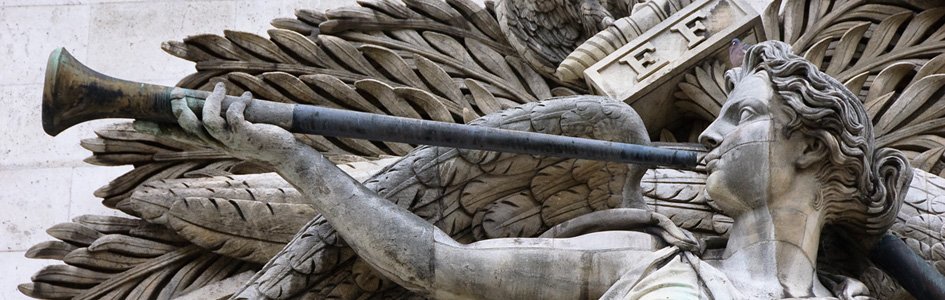
The idea of an angelic chorus singing praises to God has become very common in our culture, but does the Bible state that the angels sang on the night of Christ’s birth?
Sing it with me. “Hark! The herald angels sing, ‘Glory to the newborn King! Peace on earth and mercy mild, God and sinners reconciled.’”
Most of us are familiar with this beloved Christmas carol, written by Charles Wesley, which tells of an angelic chorus singing praises to God. In fact, many of our favorite Christmas hymns portray angels singing following the announcement of Christ’s birth to the shepherds, including “It Came Upon a Midnight Clear,” “O Little Town of Bethlehem,” and “Silent Night.”
The idea of an angelic chorus singing praises to God has become very common in our culture. Many churches depict it in their annual Christmas programs. Even Charles Spurgeon, the famous nineteenth century preacher, waxed eloquent on singing angels:
And notice how well they told the story, and surely you will love them! Not with the stammering tongue of one who tells a tale in which he has no interest; nor even with the feigned interest of a man that would move the passions of others, when he feels no emotion himself; but with joy and gladness, such as angels can only know. They sang the story out, for they could not stop to tell it in heavy prose. They sang, “Glory to God on high, and on earth peace, good will towards men.” I think they sang it with gladness in their eyes; with their hearts burning with love, and with breasts as full of joy as if the good news to man had been good news to themselves.1
But does the Bible state that the angels sang that night? The passage in question is found in the Gospel of Luke. On the night Christ was born, an angel appeared to some shepherds who were keeping their flocks:
“Then the angel said to them, “Do not be afraid, for behold, I bring you good tidings of great joy which will be to all people. For there is born to you this day in the city of David a Savior, who is Christ the Lord. And this will be the sign to you: You will find a Babe wrapped in swaddling cloths, lying in a manger.” And suddenly there was with the angel a multitude of the heavenly host praising God and saying: Glory to God in the highest, And on earth peace, goodwill toward men!“(Luke 2:10–14)
The Greek word translated as “praising” is αινουντων (ainountōn) from the root αινεω (aineō), and in a general sense, it means “to speak of the excellence of a person, object, or event.” More specifically, in the New Testament it is used to denote “the joyful praise of God expressed in doxology, hymn or prayer, whether by individuals (Lk. 2:20; Ac. 3:8 f., the group of disciples (Lk. 19:37), the community (Ac. 2:47; Rev. 19:5) or the angels (Lk. 2:13).”
Notice that one of the references above is Luke 2:20, which follows shortly after the announcement to the shepherds. Luke stated that when the shepherds returned from seeing the newborn Jesus, they were “glorifying and praising God for all the things that they had heard and seen”.
There is a strong connection in Scripture between singing and praising. The Psalms often instruct believers to sing their praises to God. For example, Psalm 47:6–7 states, “Sing praises to God, sing praises! Sing praises to our King, sing praises! For God is the King of all the earth; sing praises with understanding.” Also, James instructed cheerful believers to sing praises to God (James 5:13).
Many people have thus been led to believe that “praising” always involves singing, but, while the two are closely linked, praise is not limited to singing. A person can also praise God in many ways, such as praying, proclaiming, or shouting (Ezra 3:11).
The word translated as “saying” in Luke 2:13 is λεγοντων (legontōn) from the root λεγω (legō). This is a very common word in Scripture, and it means “to speak or talk, with apparent focus upon the content of what is said.”
So we see that an angel announced the birth of Christ to the shepherds. That angel was then joined by other angels who praised God and said, “Glory to God in the highest, and on earth peace, goodwill toward men!”
The idea of angels singing on the night of Christ’s birth has become so common that many are surprised to learn that the Bible does not unequivocally state this. This example provides a good opportunity to discuss traditions. In and of themselves, traditions are not wrong, but they must be based on and consistent with Scripture. If they contradict Scripture, then they must be rejected.
At the same time, we don’t want to be guilty of going too far in the other direction. Just because the Bible doesn’t explicitly state that they did sing does not necessarily mean that they did not. Some have even argued that angels do not or cannot sing at all, but those who make this claim must adequately address Job 38:7 and other passages that seem to support the idea that they can and have sung. Furthermore, there is no biblical or logical reason why they could not sing. Angels are highly intelligent beings who are capable of speaking. Why would they be incapable of putting those words into song, especially since other beings in heaven sing (Revelation 5:9–14)?
One of the points of this series on misconceptions is to lead us all to look closely at what the Bible teaches. Far too often traditions have been the basis of our thinking, and we end up believing things that are not found in Scripture. We have heard and sung about angels singing on that night so often that many do not bother to look closely at the text.
As we wrap up this Christmas article (pun intended), you are probably wondering if the angels did sing to the shepherds. In light of the fact that there is a strong connection between praising and singing in the Bible, and since angels, in all likelihood, are capable of singing, there exists biblical support for the tradition of singing angels found in the Christmas hymns.
Angels might sing praises to God all the time. There may indeed have been a heavenly choir of angels singing joyous songs to their Creator on the night Christ was born. Perhaps the eloquence of Wesley and Spurgeon could not even do justice to the singing angels that night. Perhaps, but the Bible doesn’t explicitly state this.
In any case, when we think about God’s amazing gift of a Savior to mankind on that night, we should glorify and praise God, whether in spoken word or in song, just as the shepherds did on that incredible night after they had seen the newborn King.
–
Joy to the world

“Then the angel said to them, ‘Do not be afraid, for behold, I bring you good tidings of great joy which will be to all people.’” (Luke 2:10)
When God became man and Jesus was born, true joy entered a world of sin and sadness. The Magi, who had long anticipated the Savior’s coming, “rejoiced with exceedingly great joy” when they saw the star standing over the young child (Matthew 2:10). This is the first mention of “joy” in the New Testament.
The heavenly host also rejoiced as their angelic captain shared with the shepherds in the field at Bethlehem the “good tidings [that is, ‘the gospel’] of great joy.” The very gospel we are to preach is a gospel of exceeding joy because we have a Savior to preach—Christ the Lord!
Although He was “a Man of sorrows and acquainted with grief” (Isaiah 53:3), the Lord Jesus “for the joy that was set before Him endured the cross” (Hebrews 12:2). He prepared His disciples for His coming death and their own subsequent sufferings for His name’s sake by conveying to them His own joy. “These things I have spoken to you, that My joy may remain in you, and that your joy may be full” (John 15:11). He prayed for them to the Father, “that they may have My joy fulfilled in themselves” (John 17:13). He promised to answer prayers offered to the Father in His name “that your joy may be full” (John 16:24).
Thus it is that all who truly believe on Christ can testify with Peter that even though “now [we] do not see Him, yet believing, [we] rejoice with joy inexpressible and full of glory” (1 Peter 1:8). Even when suffering for Him, Christians know that “when His glory is revealed, [we] may also be glad with exceeding joy” (1 Peter 4:13), for His Word promises that He will “present [us] faultless before the presence of His glory with exceeding joy” (Jude 1:24).
–
Mary and the Grace of God
“And the angel said unto her, Fear not, Mary: for thou hast found favour with God.” (Luke 1:30)
This announcement by the angel Gabriel to the virgin Mary, that she had been chosen as the mother of the coming Savior, contains the first mention in the New Testament of the Greek word for grace (charis). Mary was chosen, not for anything she had done, but because she had “found grace.”
In a remarkable parallel, certainly implying divine inspiration, the first mention of grace in the Old Testament is also associated with the coming of a new dispensation in God’s dealings with men. “But Noah found grace in the eyes of the LORD” (Genesis 6:8).
Just as Mary found grace, so Noah had found grace. Grace is not something one earns or purchases; grace is a treasure that is found! When a person finally realizes that salvation is only by the grace of God, received through faith in the saving work of Christ, he or she has made the greatest discovery that could ever be made, for it brings eternal life.
But there is an even greater dimension to the grace of God. When we do “find” grace, it is actually because God in His infinitely precious grace has found us and revealed to us the Savior of our souls. Just as God found Moses in the desert and found Paul on the road to Damascus, then saved and called them to His service, so He finds us, and then we also find His saving grace.
Mary’s discovery of God’s grace in salvation, through the coming of the “seed of the woman” into the world, is revealed in her Magnificat: “My soul doth magnify the Lord, and my spirit hath rejoiced in God my Saviour” (Luke 1:46-47). This could well have also been the testimony of Noah long ago, and it surely should be the testimony of each of us who has found grace today.
–
Signs of Christmas
“Moreover the LORD spoke again unto Ahaz, saying, Ask thee a sign of the LORD thy God; ask it either in the depth, or in the height above.” (Isaiah 7:10-11)
Although “the Jews require a sign” (1 Corinthians 1:22), and this attitude was rebuked by Christ when He said that “an evil and adulterous generation seeketh after a sign” (Matthew 12:39), God has given three specific signs with respect to the incarnation of Christ. There were other signs too, no doubt, such as the star of Bethlehem, but three events were specifically called signs.
First, to the unwilling King Ahaz, He said: “Therefore the Lord himself shall give you a sign; Behold, a virgin shall conceive, and bear a son, and shall call his name Immanuel” (Isaiah 7:14). Immanuel means “God with us,” and the sign of the virgin birth, biologically impossible without a mighty miracle of divine creation, assures us that the omnipotent God has entered the human family once for all.
That entrance was not made in an emperor’s palace as a great conqueror, however, but in the very humblest of human circumstances, and this also was a sign. “And this shall be a sign unto you,” said the leader of the angelic host; “Ye shall find the babe wrapped in swaddling clothes, lying in a manger” (Luke 2:12).
And there was a third sign. When the infant Jesus was brought to the temple, the aged prophet Simeon said: “Behold, this child is set for the fall and rising again of many in Israel; and for a sign which shall be spoken against . . . that the thoughts of many hearts may be revealed” (Luke 2:34-35).
That is, the God/man would Himself be God’s great sign to Israel and the whole world. The attitude of men and women to God, in Christ, would reveal the state of their hearts and seal their eternal destiny, whether rising again to everlasting life or falling forever away from God.
–
The Creator in the Manger
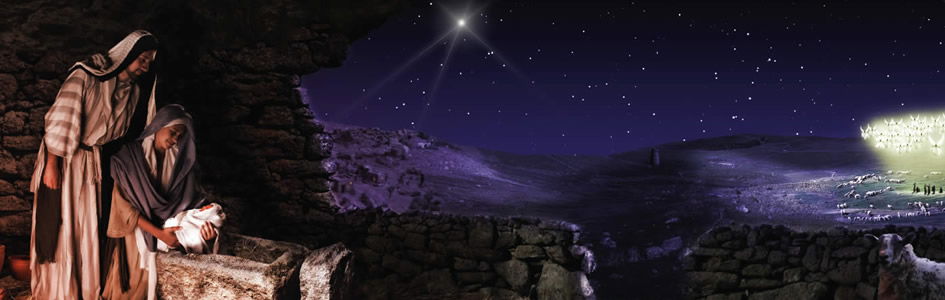
In the true Christmas story, the Prince of Peace took on human flesh, conquered sin and Satan by His death and Resurrection, and reconciles sinful believers to the holy God.
The Christmas classic ballet, The Nutcracker, spins the tale of a wooden nutcracker whose fight against the evil Mouse King transforms him back to a prince. The true Christmas story is far more miraculous and magnificent: the Prince of Peace took on human flesh, conquered sin and Satan by His death and Resurrection, and reconciles sinful believers to the holy God.
As the Son of God, this Prince has reigned in harmony with His Father from eternity past. The Bible begins with the truth of the Creator: “In the beginning God created the heavens and the earth” (Genesis 1:1). The Gospel of John begins similarly and identifies the Agent of Creation as the Son: “In the beginning was the Word, and the Word was with God, and the Word was God. He was in the beginning with God. All things were made through Him, and without Him nothing was made that was made” (John 1:1–3).
At Christmas time, we celebrate the day that the eternal Creator entered His creation.
At Christmas time, we celebrate the day that the eternal Creator entered His creation. The Creator who stretched out the heavens was laid beneath them in a manger. The limitless Son of God took on human limitations. As a baby, Jesus depended on Joseph and Mary for care and nourishment. Yet the humility of His incarnation did not detract from the glory of His deity: “And the Word became flesh and dwelt among us, and we beheld His glory, the glory as of the only begotten of the Father, full of grace and truth” (John 1:14).
Although full of glory, the Lord Jesus was not welcomed, even from birth. The Baby’s cradle was a manger because no proper room could be found. Lowly shepherds visited the newborn Savior. King Herod sought to kill Jesus by ordering the slaughter of the babies in Bethlehem. Creation neither knew nor received their Creator: “He was in the world, and the world was made through Him, and the world did not know Him. He came to His own, and His own did not receive Him” (John 1:10–11).
The same rejection happens today as “Merry Christmas” is replaced with “Happy holidays,” and nativities are banned from public display. These outward changes are a sign of hearts that refuse Jesus. People hang Christmas lights yet hide their eyes from the “true Light which gives light to every man coming into the world” (John 1:9). Why? “And this is the condemnation, that the light has come into the world, and men loved darkness rather than light, because their deeds were evil. For everyone practicing evil hates the light and does not come to the light, lest his deeds should be exposed” (John 3:19–20).
The reason so many reject Jesus, the “light of the world” (John 8:12), is because they love the sin that Christ’s light exposes. Sinful mankind would rather cling to their independence, immorality, idolatry, irreverence, and indulgences than turn in repentant faith to Jesus as the only Savior from sin and Lord of life.
Many continue to reject the Prince of Peace, and the enemy, Satan, “the prince of the power of the air” (Ephesians 2:2), strives to blind men from the light: “whose minds the god of this age has blinded, who do not believe, lest the light of the gospel of the glory of Christ, who is the image of God, should shine on them” (2 Corinthians 4:4).
But there is hope. God the Father makes rescue missions into dark enemy territory: “He has delivered us from the power of darkness and conveyed us into the kingdom of the Son of His love, in whom we have redemption through His blood, the forgiveness of sins” (Colossians 1:13–14). Redemption means to free by paying a ransom. Christ gave His life as a ransom to the Father by dying in the sinner’s place (Matthew 20:28; 1 Peter 2:24).
The Son willingly gave Himself to be laid in the manger and later laid on the Cross.
The Son willingly gave Himself to be laid in the manger and later laid on the Cross. In his book God’s Gift of Christmas, John MacArthur writes, “Those soft little hands, fashioned by the Holy Spirit in Mary’s womb, were made so that nails might be driven through them. Those baby feet, pink and unable to walk, would one day walk up a dusty hill to be nailed to a cross. . . . Jesus was born to die.” Yes, Jesus was born to die for sin and rise in victory.
The sinner who receives Jesus becomes a child of God: “But as many as received Him, to them He gave the right to become children of God, to those who believe in His name: who were born, not of blood, nor of the will of the flesh, nor of the will of man, but of God” (John 1:12–13). Because of Jesus’ birth into this world for redemption, the sinner can be born into the family of God. That’s reason to celebrate at Christmas and throughout the year!
–
The Nativity: Fact or Fiction?

In Genesis 3:15, God says to Satan ‘And I will put enmity between you and the woman, and between your seed and her seed; He shall bruise you on your head and you shall bruise him on the heel.’ Numerous Christian and Jewish Bible scholars have interpreted this verse as the first prophecy of the Messiah. Known as the Protevangelium, it is the first Gospel promise made to sinful mankind, whose willful rebellion in the Garden of Eden brought forth death, suffering, and a corruption of God’s perfect creation.
This verse makes two implicit promises. First, it hints at the virginal conception, as the Messiah is referred to as the seed of the woman. This is contrary to the normal biblical practice of naming the father, and not the mother, of a child. Second, it hints at the Messiah’s suffering and ultimate victory.
Christmas is the traditional time to celebrate the birth of the promised Messiah, Jesus Christ. Christ’s birth is not only a fulfillment of several Old Testament prophecies. It is a real event supported by highly credible, historical evidence.
The narratives of Christ’s nativity are found in the Gospels of Matthew and Luke. Critics have often asserted that these accounts markedly differ from one another, casting doubt on their historical reliability. In addition, they contain supernatural events which those with a naturalistic worldview find hard to accept.
However, an open-minded analysis will reveal that the Nativity was a historically credible event and that the supernatural accounts are not at all improbable, given the existence of God. The investigation will focus primarily on Luke’s Gospel, since his narrative is the longest and his reputation as an accurate historian is well known in scholarly circles.
Who was Luke and what did he write?
Luke was a Greek physician and historian. He was the author of the Gospel of Luke and the Acts of the Apostles, together accounting for 25% of the entire New Testament. In addition, he was a close companion of Paul, the Jewish Pharisee who converted to Christianity after initially beating, imprisoning, and executing early Christians.
… archaeological discoveries are showing over and over again that Luke is accurate in what he has to say.
Luke’s Gospel opens with an explicit declaration of intent to establish an accurate historical record of the life of Christ. And his historical investigation is based on direct and indirect eyewitness accounts from Paul, Peter, James, Mark, Mary (Jesus’ mother), and other early Christians.
Luke’s historical scholarship is held in the highest esteem. Consider the words of Sir William Mitchell Ramsay (1851–1939), the archaeologist and professor from Oxford and Cambridge Universities:
“Luke is a historian of the first rank … This author should be placed along with the very greatest of historians.”
Renowned archaeologist, John McRay, states:
“He’s erudite, he’s eloquent, his Greek approaches classical quality, he writes as an educated man, and archaeological discoveries are showing over and over again that Luke is accurate in what he has to say.”
When did Luke write the Nativity story?
Many scholars date Luke’s Gospel around AD 80. However, they tend to ignore the cogent arguments of the liberal New Testament scholar J.A.T. Robinson for dating all the Gospels from AD 40–65 (see a summary of the reasons, and more information). Thus Luke should be dated around AD 60, since it is the first of Luke’s two-volume work.3 But even if the older were true, then Luke’s Gospel was written about fifty years after Christ.
Why is this important? Temporal proximity is a crucial factor in establishing historical reliability. In other words, the closer the writings are to the actual events, the more likely they are to be accurate and free from legendary contamination.
A.N. Sherwin-White (1911–1993), the eminent classical historian from Oxford University, conducted a careful study of Greek and Roman history to determine the rate at which legend accumulates. The evidence revealed that not even two full generations would be enough for legendary development to wipe out the historical core of a historical story, as he says:
“The agnostic type of form-criticism would be much more credible if the compilation of the Gospels were much later in time … . Herodotus enables us to test the tempo of myth-making, [showing that] even two generations are too short a span to allow the mythical tendency to prevail over the hard historic core.”
Ironically, adding at least two generations to Jesus’ death lands you in the second century AD, the exact time when the apocryphal gospels begin to appear. Therefore, Luke’s nativity narrative, even if written about fifty years after Christ, is well within two generations. Thus Sherwin-White had good reason to say:
“For the New Testament of Acts, the confirmation of historicity is overwhelming … any attempt to reject its basic historicity, even in matters of detail, must now appear absurd. Roman historians have long taken it for granted.”
How does Luke’s Gospel compare to other famous historical texts?

There are two generally reliable accounts of Hannibal (247–183 BC ) crossing the Alps in 218 BC to attack Rome. Polybius (c. 200 – c. 118 BC), a Greek historian, chronicled Hannibal’s invasion at least 50 years after the actual event. Livy (c. 59 BC – AD 17), a Roman historian, wrote of Hannibal’s invasion about 190 years after the actual event.
Another famous event in history was Julius Caesar (100–44 BC) crossing the Rubicon in 49 BC without disbanding his army. Suetonius (c. 69/75 – after 130), a Roman historian, wrote his historical account of Caesar crossing the Rubicon at least 110 years after the event, and it is considered to be generally reliable. In addition, the two earliest biographies of Alexander the Great, written by Arrian and Plutarch, were written over 400 years after his death. And these biographies are considered to be generally trustworthy.
Aren’t there discrepancies between Luke’s and Matthew’s Nativity accounts?
An ill-informed skeptic might view these discrepancies as contradictions. However, a historian would note that these apparent inconsistencies are all in the secondary details. Despite the differences in secondary details, there is a historically reliable core that is common to both Gospels. The virgin Mary is told by an angel that she will conceive by the Holy Spirit. She is told to name the boy Jesus. The baby Jesus is born in Bethlehem, and after a short time, they return to Nazareth.
The two historical accounts of Hannibal crossing the Alps are completely inconsistent in their secondary details. However, no classical historian doubts that Hannibal crossed the Alps to attack Rome. There is still a historical core to a historical story that is considered very credible.
Ironically, the differences in the secondary details between the two Nativity narratives can be viewed as positive evidence for the story’s authenticity. They reveal that we have two independent narrators recording different aspects of the same great event.
Aren’t there problems with Luke’s census?

Images like this show the wise men visiting the baby in the stable. However, this event was about a year after the birth.
Many critics assert that there is no evidence of the census that brought Joseph and Mary to Bethlehem. However, there is evidence for three different censuses around the time of Christ. First, Josephus (c. 37 – c. 100 AD), the famous Jewish historian, records a census around AD 6. Second, a papyrus dated from AD 48 indicates that the entire family was involved in a census. Third, an official government order in AD 104 records how the Roman Prefect of Egypt ordered all people to return to their own homes to carry out the census. Therefore, there is historical precedent for the type of census that is described in the Gospel of Luke.
Luke also writes that the census was conducted when Quirinius was governing Syria, during the reign of Herod the Great. The problem is that Herod died in 4 BC and Quirinius didn’t begin ruling Syria until AD 6. However, renowned archaeologist Sir William Ramsay concluded from various coin inscriptions that Quirinius ruled Syria on two separate occasions. Also, some Greek language scholars have declared that Luke’s text should actually be translated, ‘This census took place before Quirinius was governing Syria.’ (See this discussion on the census for documentation.) Either way, credible explanations exist.
How can we accept the miraculous events of the Nativity?
It has already been established that Luke is considered one of the most reliable historians of all time. The argument that his documentation of supernatural occurrences somehow undermines his reliability can only be utilized by presupposing that the God of the Bible does not exist. On the other hand, if one presupposes the existence of the God of the Bible, then the account of His miraculous intervention at the Nativity is perfectly logical and internally consistent.
Conclusion
Christ’s birth is one of the greatest events in all of history. Although the popular media and most educational institutions largely ridicule the biblical version of the Nativity (see Time and Newsweek blatantly attack Christian doctrine for a refutation of a systematic attack two years ago), a fair-minded analysis paints a different picture. Foretold by Old Testament prophecies, supported by historical evidence, and logically feasible based on the existence of the God of the Bible, the Nativity is much more than just a nice story. It is the story of the Creator of the universe bursting into human history as a physical descendant of the first Adam. Yet, unlike the first Adam who became a sinful man, Christ was without sin (Hebrews 4:15). As the last Adam (1 Corinthians 15:45), Christ was born into this world to suffer a humiliating death on the cross in order to die for the sins of the whole world. ‘For God so loved the world, that he gave his only begotten Son, that whosoever believes in him should not perish but have eternal life.’ (John 3:16)
–
What Is Boxing Day?

If you’re an American reader, you’re probably not familiar with the holiday Boxing Day. This holiday takes place on December 26, the day after Christmas. It is usually characterized by time spent visiting family, eating Christmas day leftovers, and shopping for some great deals. But this bears little correlation to the historical day.
History of Boxing Day
The origins of Boxing Day are somewhat debated. The most likely story dates back hundreds of years to Britain. One version says that on December 26 wealthy families would give their servants and tradespeople a gratuity of either money or a “Christmas box” full of food and gifts to thank them for their service and for working all day Christmas Day. According to another tradition, churches would set up boxes to be filled with gifts on Christmas Day, which would then be distributed to the poor the following day. Regardless of which tradition is correct, each of these stories shows that Boxing Day had its origin in gift-giving to others.
Another name for Boxing Day is St. Stephen’s Day to commemorate the death of the first Christian martyr, Stephen (Acts 7:54–60). This is the day mentioned in the Christmas carol “Good King Wenceslas”:
Good King Wenceslas looked out
On the feast of Stephen . . .
When a poor man came in sight
Gath’ring winter fuel . . .
“Bring me flesh and bring me wine
Bring me pine logs hither
Thou and I will see him dine
When we bear him thither.”
In this carol, when King Wenceslas sees a poor man struggling to collect fuel, he and his page bring gifts of food, drink, and fuel to his home. This carol highlights the giving theme of St. Stephen’s Day, or Boxing Day.
Boxing Day Today
Boxing Day is still celebrated, often as a statutory public holiday, today in many countries including the United Kingdom, Australia, New Zealand, Canada, and other British Commonwealth countries. Although there is still some gratuity-giving on Boxing Day to those who work in service occupations, the day is largely not about giving anymore. Just like there is American football on Thanksgiving Day in America, there are many sports that have Boxing Day games such as football (soccer), horse races, rugby, and traditionally fox hunting in the United Kingdom, and cricket, basketball, and yacht racing in Australia. International ice hockey championships are also often played on Boxing Day.
In Canada, the UK, and some Australian states, Boxing Day is a shopping extravaganza with deals similar to American Black Friday. In some places lines begin forming hours before the stores open. Boxing Week sales have even replaced Boxing Day sales in some areas to make a whole week of sales.
Esteeming Others
We are commanded to put others above ourselves by looking out for their interests, rather than our own.
The historical Boxing Day ties in easily with a biblical worldview. By the inspiration of the Holy Spirit Paul wrote in Philippians, “Do nothing out of selfish ambition or vain conceit. Rather, in humility value others above yourselves, not looking to your own interests but each of you to the interests of the others” (Philippians 2:3–4). We are commanded to put others above ourselves by looking out for their interests, rather than our own. What better time to practice this than Christmastime? Christmas is the time when we consciously focus on Christ’s birth, the greatest gift to mankind. In Philippians 2:5–11 we see the perfect example of humility and attention to the interests of others in the Lord Jesus Christ. He, the one to whom we will all someday bow, was willing to come and be born as a servant, humbling Himself to the point of dying on a cross. What an incredible expression of love and humility!
As you celebrate Christmas this year, take time on Boxing Day, or any other day, to actively model Philippians 2:3–4 for others. Perhaps you can give an extra tip to those who work in gas stations or restaurants on Christmas Day to thank them for their service, or give a gratuity of money, a small gift or even some baked goods to the kid who shovels your snow or the person who delivers your mail or collects your garbage. Through your small act of kindness you will actively show people the love and service of Christ just as He has showed that to us through His death.
Recognizing Those Who Serve
Historically, Boxing Day was likely about recognizing those who serve and thanking them for their service. Again, this is biblical. 1 Timothy 5:18 says, “For the Scripture says, ‘You shall not muzzle an ox while it treads out the grain,’ and, ‘The laborer is worthy of his wages.’” This Scripture teaches that appropriate pay and recognition of those who work and serve is important. Boxing Day is a great day to do what we should be doing all year long, expressing our appreciation for those who serve. This would be a great time to honor your pastor or a missionary or military family and thank them for the hard work they do every single day.
Holidays for God’s Glory
Holidays, such as Boxing Day, can be used for the glory of God. Instead of merely celebrating with the traditions that you and your family have done every year, consider introducing some new traditions that reach out to others with encouragement and with the gospel. Even if Boxing Day isn’t a traditional holiday where you come from, perhaps consider incorporating the idea of giving to those in need and thanking those who serve into your Christmastime celebrations. In doing so you will show others the love of Christ and open up doors to share with them the real meaning of the season—Jesus Christ, the greatest gift ever given to this world.
–
Why Jesus Came Down From Heaven

“No one has ascended to heaven but He who came down from heaven, that is, the Son of Man who is in heaven” (John 3:13).
At Christmas, even the secular world makes much of the Christ child, born in a manger. But few seem to recognize that He had been eternally one with the Father in heaven before He chose to come down. And even fewer stop to learn just why He chose to come down. As a matter of fact, He had much to say on this subject, giving many reasons why He came. Note just a few of them.
The first reference in the New Testament on this great theme, coming from His own lips, is very significant. “Do not think that I came to destroy the Law or the Prophets. I did not come to destroy but to fulfill” (Matthew 5:17). His total commitment to God’s written Word was the first thing He came to confirm!
There are so many reasons He has given for His coming that we can just list a small part of them. But note these especially. “For the Son of Man has come to seek and to save that which was lost” (Luke 19:10). “I have not come to call the righteous, but sinners, to repentance” (Luke 5:32). “Do not think that I came to bring peace on earth. I did not come to bring peace but a sword” (Matthew 10:34). “For I have come down from heaven, not to do My own will, but the will of Him who sent Me” (John 6:38). “I have come that they may have life, and that they may have it more abundantly” (John 10:10b).
The last time Christ gives a reason for His coming is also significant. It refers to His second coming! “And behold, I am coming quickly, and My reward is with Me, to give to every one according to his work” (Revelation 22:12).
–
(THIS PAGE IS STILL UNDER CONSTRUCTION)
 Rev. Lars Haukeland - studies